In praise of the dry-stone wall
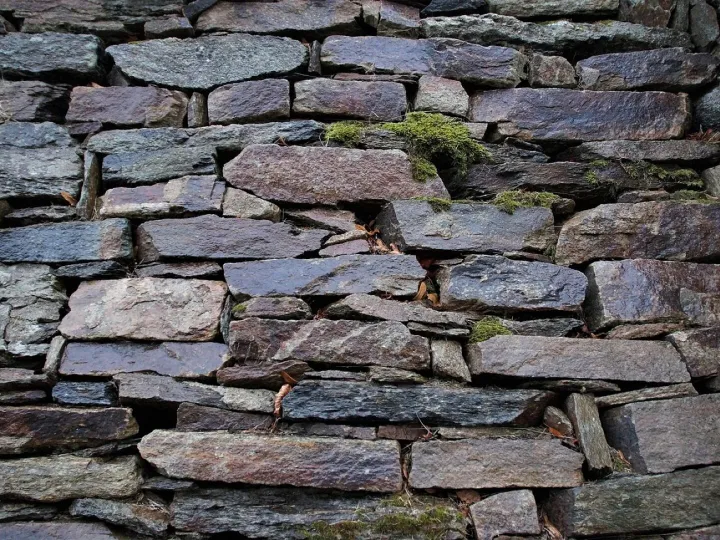
Ted Prosser has been walling for forty years, and for the last ten of them he has been making our designs better than the drawings deserved. Spend a morning watching him work and you understand why we specify dry stone wherever the budget and the landscape allow.
A dry-stone wall is exactly what it says: stone on stone, gravity and friction, not a bag of mortar in sight. Each piece is picked, turned twice and set once. You don’t force a stone, Ted says. You find the one that wants to be there. A metre of wall takes him about a day, and it is a day you can see afterwards.
What the technique gives a garden is more than looks. A mortared wall is a barrier; a dry wall is a habitat. The crevices shelter toads and beetles, wrens work the face of it all winter, and within a couple of seasons the top courses carry their own small meadow of stonecrop and herb robert. It moves with the ground through frost, so it never cracks — walls like these outlast the people who build them by a century or two.
We use them as retaining walls on sloping sites, as low seats at terrace edges, and sometimes just as a full stop at the end of a border. Nothing else we can specify does so much while trying so little.
Foxglove & Fern
A garden design studio in Shropshire, England. We make planting-led gardens that belong to their landscape and reward patience.
Contact
Studio The Old Dairy, Longnor, Shropshire SY5 7PP
Phone 01694 720 304
Email hello@foxgloveandfern.co.uk
Hours Mon–Fri, 9am–5pm